


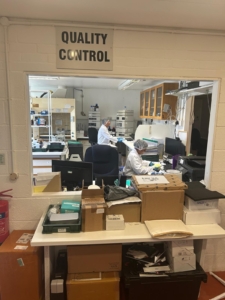
GMP stands for Good Manufacturing Practice. It is a system of principles, procedures and controls designed to ensure that medicinal products are consistently manufactured and controlled to the required quality standards. For practitioners prescribing herbal medicines, understanding cGMP can provide valuable insight into what happens behind the scenes before a product reaches the dispensary, clinic or patient. At Rutland Biodynamics, GMP is an important part of our approach to manufacturing high-quality herbal medicines, alongside our commitment to organic and biodynamic cultivation, careful sourcing and traceability.
What Is Good Manufacturing Practice?
Good Manufacturing Practice is fundamentally about consistency, control and quality.
Manufacturing medicines involves many individual stages, from receiving and identifying raw materials through to processing, filling, packaging, testing and releasing the finished product. cGMP provides a structured framework for controlling these processes. The aim is to make sure that medicines are manufactured consistently and that appropriate measures are in place to minimise risks such as:
- Contamination
- Mix-ups between ingredients or products
- Errors during manufacturing
- Inconsistent processes
- Incorrect labelling or packaging
- Problems with storage and handling
- Inadequate documentation or traceability
GMP therefore isn’t simply about the finished bottle. It encompasses the systems and controls surrounding the entire manufacturing process.
Why Does GMP Matter for Herbal Medicines?
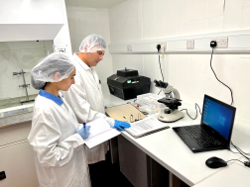
Herbal medicines are made from naturally occurring plant materials, and plants can naturally vary according to factors such as growing conditions, harvesting time, geographical location and storage. This makes appropriate manufacturing controls particularly important. A high-quality herbal medicine manufacturer needs to understand not only the identity and quality of the plant material being used, but also how that material is handled and processed. GMP helps provide a controlled framework for managing this variability and ensuring that manufacturing processes are clearly defined, documented and monitored For practitioners, this can provide greater confidence that the products they prescribe have been manufactured within a controlled quality system.
cGMP Is More Than a Quality Check at the End
One common misconception is that GMP simply means testing the finished product. In reality, quality needs to be considered throughout the manufacturing process. This can include controls around:
Raw materials
Materials need to be appropriately identified, assessed and controlled before they enter the manufacturing process.
Manufacturing processes
Processes should be defined and carried out consistently, with appropriate controls in place.
Personnel
People involved in manufacturing need appropriate training and responsibilities.
Facilities and equipment
Manufacturing environments and equipment need to be suitable for their intended purpose and appropriately maintained.
Documentation
Manufacturing activities need to be documented so that processes can be demonstrated, reviewed and traced.
Quality control
Appropriate checks and testing help ensure that materials and finished products meet the required specifications.
Traceability
Records allow materials and products to be traced through the manufacturing process.
Together, these controls create a comprehensive approach to quality rather than relying on a single final inspection.
What Does cGMP Mean for a Practitioner?
For practitioners, GMP can be an important consideration when deciding which herbal medicines to use or recommend.
You may want to ask:
- Where do the herbs come from?
- How are raw materials identified and controlled?
- Where are the medicines manufactured?
- What quality systems are in place?
- How are manufacturing processes controlled?
- How is batch traceability maintained?
- What testing and quality checks are undertaken?
- Does the manufacturer operate within an appropriate regulatory framework?
The answers to these questions can help build a clearer picture of the journey from plant material to finished medicine.
Traceability: Knowing Where Your Herbal Medicine Comes From
GMP and traceability go hand in hand. Being able to trace a finished product back through its manufacturing history provides an important layer of control. It allows manufacturers to maintain records relating to the materials, processes and batches involved in production. At Rutland Biodynamics, this is particularly significant because we have our own biodynamic farm, where we grow approximately 80 different medicinal herbs.
For our Fresh Organic Range, this creates a direct connection between cultivation and manufacturing. Where herbs are grown on our own farm, we can have direct knowledge of their cultivation and harvesting before they enter our manufacturing processes. This farm-to-bottle approach gives us an exceptional level of visibility over the journey of the herbs used in our medicines.
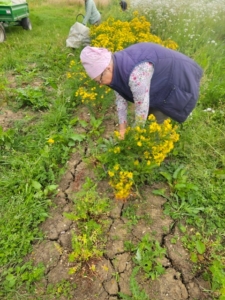
From the Farm to the Manufacturing Facility
Our approach brings together two important areas of expertise: medicinal herb cultivation and controlled herbal medicine manufacturing. Our biodynamic farm provides the starting point, with around 80 medicinal herbs cultivated using organic and biodynamic principles. The harvested plant material can then move into our manufacturing processes, where appropriate controls are applied to its handling, processing and transformation into herbal medicine. This connection between growing and manufacturing is an important part of what makes Rutland Biodynamics distinctive. Rather than viewing cultivation and manufacturing as completely separate stages, we see them as interconnected parts of the journey.
Why Manufacturing Experience Matters
Producing a herbal tincture involves considerably more than combining a plant with an extraction medium. A professional manufacturing environment requires carefully controlled processes, appropriate equipment, trained personnel, documented procedures and quality systems. This becomes particularly important when medicines are being produced for professional use and supplied consistently across multiple batches. At Rutland Biodynamics, our manufacturing operations are supported by an MHRA-approved, cGMP manufacturing facility, bringing pharmaceutical manufacturing principles and controls to the production of our herbal medicines.
cGMP and Consistency
One of the key benefits of a controlled manufacturing system is consistency. Natural plant materials can vary. Good manufacturing systems help ensure that, wherever possible, the manufacturing process itself is controlled and repeatable. For practitioners, consistency matters because the herbal medicine prescribed today should be manufactured to the same appropriate standards as the product supplied in the future. This is particularly relevant when practitioners build herbal medicines into an established treatment approach and need confidence in the quality and reliability of the products they use.
GMP, Quality and Patient Confidence
Ultimately, cGMP is about protecting the quality of medicines. Practitioners have a responsibility to consider the quality and suitability of the products they use, while patients increasingly want to understand where their medicines come from and how they are made. Being able to explain that a herbal medicine has been manufactured within a controlled cGMP environment can provide an additional level of reassurance. For Rutland Biodynamics, this forms part of a wider philosophy:
Safe. Sustainable. Effective.
Our aim is to combine responsible cultivation, careful manufacturing and robust quality systems to produce herbal medicines that practitioners can use with confidence.
Choosing a Herbal Medicine Manufacturer
GMP is just one part of the wider picture when selecting a herbal medicine manufacturer. Practitioners may also want to consider:
Provenance – Can the manufacturer explain where the herbs come from?
Traceability – Can the journey of the ingredients and finished product be documented?
Cultivation – Are the plants grown responsibly and, where possible, close to the manufacturing process?
Manufacturing standards – Does the manufacturer operate within an appropriate GMP environment?
Quality control – Are appropriate procedures in place to monitor materials and finished products?
Transparency – Is the manufacturer willing to explain how its medicines are produced?
At Rutland Biodynamics, we believe these elements work together.
From Plant to Medicine
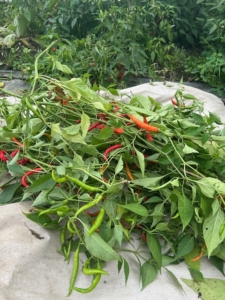
For practitioners, GMP may initially seem like a technical manufacturing term. In reality, it represents something much more straightforward: a commitment to controlled, consistent and quality-focused manufacturing. When that approach is combined with responsible cultivation, fresh medicinal herbs and strong traceability, it creates a clear connection between the plant grown in the field and the medicine ultimately used by the patient. At Rutland Biodynamics, our biodynamic farm, Fresh Organic Range and cGMP manufacturing facility allow us to follow that journey from cultivation through to finished herbal medicine.
Finally, FRESH ORGANIC Artemisia absinthium 1:2 and Rosmarinus officinalis. 1:2 now BACK IN STOCK. Please click on these links to purchase
Artemisia absinthium – Rutland Biodynamics
Rosmarinus officinalis – Rutland Biodynamics
From field to bottle, quality is built into every stage.
Rutland Biodynamics – Safe. Sustainable. Effective.



