


If you prescribe or recommend herbal medicines, the quality of the manufacturer matters. But when comparing suppliers, you may come across both GMP and cGMP. What do these terms mean, and what should a practitioner look for when choosing a herbal medicine manufacturer?
At Rutland Biodynamics, we manufacture our herbal medicines in an MHRA-approved, cGMP manufacturing facility. This means practitioners can have confidence that our manufacturing processes operate within a current, controlled and regulated pharmaceutical quality framework.
But what exactly does cGMP mean?
What Does GMP Mean?
GMP stands for Good Manufacturing Practice. It is a system of requirements and controls designed to ensure that medicinal products are consistently manufactured and controlled to the appropriate quality standards.
In the UK, the Medicines and Healthcare products Regulatory Agency (MHRA) inspects medicine manufacturing sites to assess compliance with GMP. The MHRA describes GMP as the minimum standard that a medicines manufacturer must meet, with requirements designed to ensure medicines are consistently high quality and appropriate for their intended use.
GMP covers much more than simply checking the finished product.
It encompasses areas such as:
- Raw material control
- Manufacturing processes
- Quality control
- Documentation
- Personnel training
- Facilities and equipment
- Cleaning and hygiene
- Batch records
- Traceability
- Deviation and investigation procedures
- Quality management
- Product release
For a practitioner, this matters because the quality of a herbal medicine depends on the controls applied throughout its manufacture—not simply what happens when the finished bottle is tested.
So What Is cGMP?
The “c” in cGMP stands for “current.” In practical terms, cGMP emphasises that Good Manufacturing Practice needs to remain current and appropriate to modern manufacturing, quality and regulatory expectations. It is not a completely separate system from GMP. Instead, cGMP reflects the principle that manufacturing practices, technology, procedures, controls and quality systems should be kept up to date rather than relying on outdated methods simply because they once met a requirement. For a manufacturer, this means continually considering whether its systems and processes remain appropriate, effective and aligned with current expectations. For a practitioner, that is an important distinction.
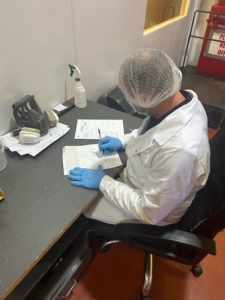
Writing out batch information for the barrel
Why Does “Current” Matter?
Medicinal manufacturing is not static. Technology develops. Analytical methods improve. Understanding of contamination risks evolves. Data integrity expectations become more sophisticated. Manufacturing systems are refined and regulatory expectations change. A manufacturer committed to cGMP therefore needs to maintain a culture of continuous quality and improvement.
The objective is not simply:
“Did we meet the standard once?”
It is:
“Are our systems, processes and controls appropriate for current manufacturing expectations?”
That mindset is particularly valuable when producing medicines that practitioners depend upon for consistent professional use.
What Does cGMP Mean for a Practitioner?
When you purchase a herbal medicine, you are ultimately placing trust in the manufacturer. You may know the botanical name of the herb, the extraction ratio and the formulation, but you may have much less visibility of what happened inside the manufacturing facility. This is where GMP and cGMP become important. A properly controlled manufacturing environment provides confidence that there are defined systems governing the journey from raw material through to finished product. For practitioners, this can mean greater confidence in:
Consistency
Controlled manufacturing processes are designed to produce medicines consistently from batch to batch.
Traceability
Documentation and batch records allow materials and manufacturing activities to be traced.
Quality Control
Appropriate quality systems and testing help ensure materials and products meet defined requirements.
Process Control
Manufacturing isn’t left to individual preference. Processes are documented, controlled and monitored.
Accountability
A regulated manufacturing environment creates clear responsibilities for quality, production and product release.
Ongoing Quality
The “current” element of cGMP reinforces the importance of maintaining and improving systems rather than treating compliance as a one-off achievement.
cGMP Isn’t Just About the Finished Bottle
This is one of the most important things for practitioners to understand. A high-quality herbal medicine isn’t created simply by testing the bottle at the end of the manufacturing process. Quality needs to be built into the entire process. Consider the journey of a medicinal herb.
First, the plant needs to be correctly identified.
Then there is cultivation or sourcing, harvesting, handling, storage and preparation.
The manufacturing process then needs to be controlled, documented and reproducible.
The finished product needs to undergo appropriate quality checks before it can be released.
Each stage contributes to the quality of the final medicine.
This is why a manufacturer’s quality system can be just as important as the ingredients themselves.
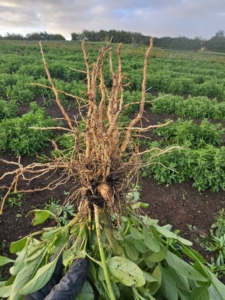
Withania root ready for washing and same day macerating. This is the part of the herb we use for our fresh organic tinctures.
Why This Matters Particularly for Herbal Medicines
Herbal medicines begin with natural materials, and natural materials can vary. Plants are influenced by growing conditions, soil, weather, harvesting time, storage and handling. This makes appropriate control and documentation particularly important. At Rutland Biodynamics, we have an additional advantage: we grow approximately 80 different medicinal herbs on our own biodynamic farm. This gives us direct knowledge of the cultivation and harvesting of many of the herbs used in our Fresh Organic Range. The connection between our farm and our manufacturing facility creates an exceptional level of visibility from cultivation through to finished product.
Farm-to-Bottle Quality Control
Our approach combines biodynamic cultivation with cGMP manufacturing. That means the story of our herbal medicines doesn’t begin when the raw material arrives at a manufacturing facility. For many of our Fresh Organic herbs, it begins in the field. We can know where the plant was grown, how it was cultivated and when it was harvested before it enters our controlled manufacturing processes. From there, our manufacturing systems provide the framework for processing, documentation, quality control and traceability. This combination is a significant part of what makes Rutland Biodynamics different.

Why Should Practitioners Look Beyond “GMP”?
GMP is an essential consideration when selecting a professional herbal medicine supplier. But practitioners may also want to look at the depth and quality of the manufacturer’s overall approach. Ask questions such as:
- Is the manufacturing facility subject to MHRA oversight?
- Is the site operating under an appropriate manufacturing authorisation?
- Is the manufacturer working to current GMP expectations?
- How are raw materials controlled?
- How are batches documented and traced?
- What quality control procedures are in place?
- Where do the herbs come from?
- Can the manufacturer demonstrate genuine knowledge of its supply chain?
- How closely connected are cultivation and manufacturing?
These questions help move the conversation beyond a simple tick-box approach to GMP.
Rutland Biodynamics: cGMP Herbal Medicine Manufacturing
At Rutland Biodynamics, our herbal medicines are manufactured in an MHRA-approved, cGMP manufacturing facility. This provides practitioners with confidence that our manufacturing takes place within a controlled pharmaceutical quality environment. Combined with our biodynamic farm, where we grow approximately 80 medicinal herbs, our approach brings together:
Biodynamic cultivation
Fresh medicinal herbs
Traceability
Controlled manufacturing
Quality systems
cGMP standards
It is this combination that allows us to take a genuinely integrated approach to herbal medicine production.
The Practitioner Advantage
When choosing a herbal medicine manufacturer, it is worth looking beyond the label. The quality of a medicine is influenced by everything that happens before it reaches the practitioner. A manufacturer operating within a current GMP/cGMP framework provides an additional level of assurance that appropriate systems, controls and documentation are in place. At Rutland Biodynamics, we take this further by connecting our own medicinal herb cultivation with our cGMP manufacturing operation.
From our biodynamic fields to our manufacturing facility, quality and traceability are considered at every stage. For practitioners, that means greater confidence in knowing not only what is in the bottle, but how it got there.
Rutland Biodynamics – Safe. Sustainable. Effective.
And finally, we are please to announce that Cynara Scolymus 1:2 FRESH ORGANIC tincture is now back in stock. Please click here to order Cynara scolymus – Rutland Biodynamics



